
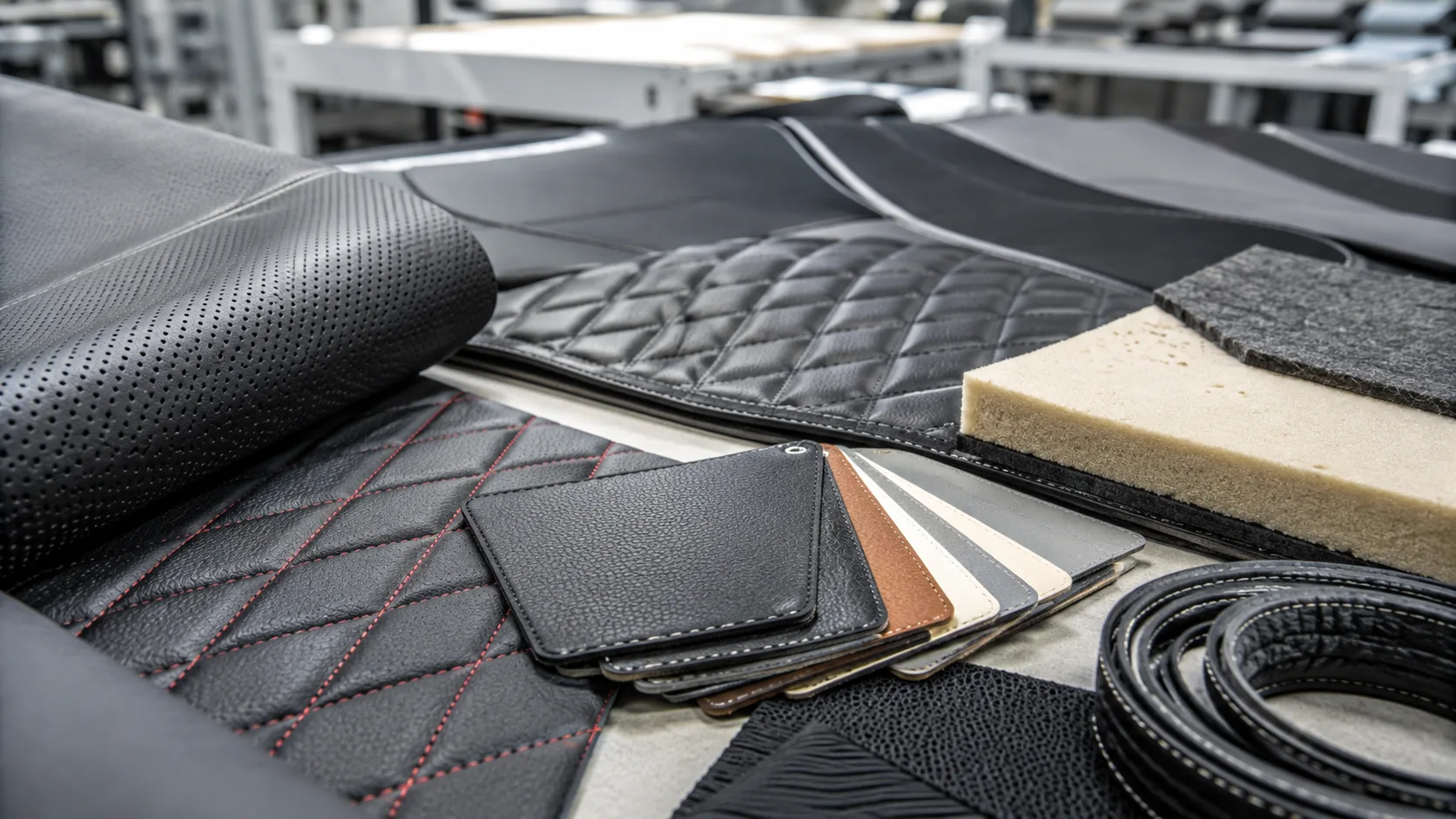
Am besten für warme Klimazonen: Eisseide. Am besten für Flotten geeignet: PU-Leder. Am besten für Familien: verstärkter Stoff. Das von Ihnen gewählte Material definiert Ihre Produktlinie mehr als jede andere Entscheidung. Wenn Sie den falschen Stoff importieren, haben Sie eine ganze Saison lang mit Retouren, Preisnachlässen und Reputationsproblemen zu kämpfen. Wenn Sie es richtig machen, kann die gleiche Deckung über Jahre hinweg eine gesunde Marge bieten. Dieser Leitfaden richtet sich an Importeure und Großkäufer, die Sitzbezugsmaterialien mit ihrem Zielmarkt vergleichen müssen, nicht an Endverbraucher.
Die Materialien, die für Ihren Markt wichtig sind
Die meisten Sitzbezüge, die heute asiatische Fabriken verlassen, lassen sich in drei Familien einteilen, und jede davon ist einem anderen Kundenprofil zugeordnet.
Eisseide (Polyester + Spandex-Mischung). Dies ist die am schnellsten wachsende Kategorie in Märkten für warme Klimazonen. Die Kreuzwebstruktur bietet eine um 10–15 % höhere Luftdurchlässigkeit als herkömmliche gewebte Stoffe, wodurch die Sitzoberfläche nach Sonneneinstrahlung messbar kühler bleibt, ohne dass sich das Leder klebrig anfühlt. Importeure von Eisseidenanzügen verkaufen sie an Mitfahrer, tägliche Pendler und alle Märkte, auf denen Fahrzeuge in der Sonne stehen – sehen Sie sich unsere an Autositzbezüge aus Eisseide für ein fertiges Beispiel der Familie.
PU-Leder. Die professionelle und kommerzielle Wahl. Flottenbetreiber, Taxiunternehmen und Geschäftsanwender bevorzugen es, weil es sich leicht reinigen lässt, erstklassig aussieht und für den Endkäufer wie ein Upgrade wirkt – a Vollleder-Autositzbezug ist typisch für die Bestellung kommerzieller Sender. Dies ist die richtige Wahl, wenn Ihr Kanal Wert auf Aussehen und einfache Pflege legt und nicht auf Atmungsaktivität.
Verstärkter Stoff und Sportstoff. Das Arbeitstier für Familien, Haustierbesitzer und Schwerlastfahrzeuge. Höhere Abriebfestigkeit und wasserabweisende Rückseite machen es zu einer sicheren, großvolumigen Option, die das ganze Jahr über verkauft wird.
Bauqualität, die Sie in jedem Muster sehen sollten
Das Material allein macht noch keinen haltbaren Bezug aus. Fragen Sie Ihren Lieferanten nach der Konstruktion hinter der Oberfläche und prüfen Sie bei jedem Muster diese drei Dinge:
- Anzahl der Ebenen. Eine 4-Lagen-Konstruktion – Nutzschicht, 2 mm Schaumstoffpolsterung und Trägermaterial – absorbiert Stöße und behält ihre Form. Einlagige Bezüge sehen vom ersten Tag an gut aus und hängen innerhalb von Monaten durch.
- Abriebfestigkeit. Bezüge, die beim Martindale-Test mehr als 5.000 Scheuerzyklen überstehen, halten dem täglichen Gebrauch stand. Alles, was weit darunter liegt, stellt in stark beanspruchten Märkten ein Renditerisiko dar.
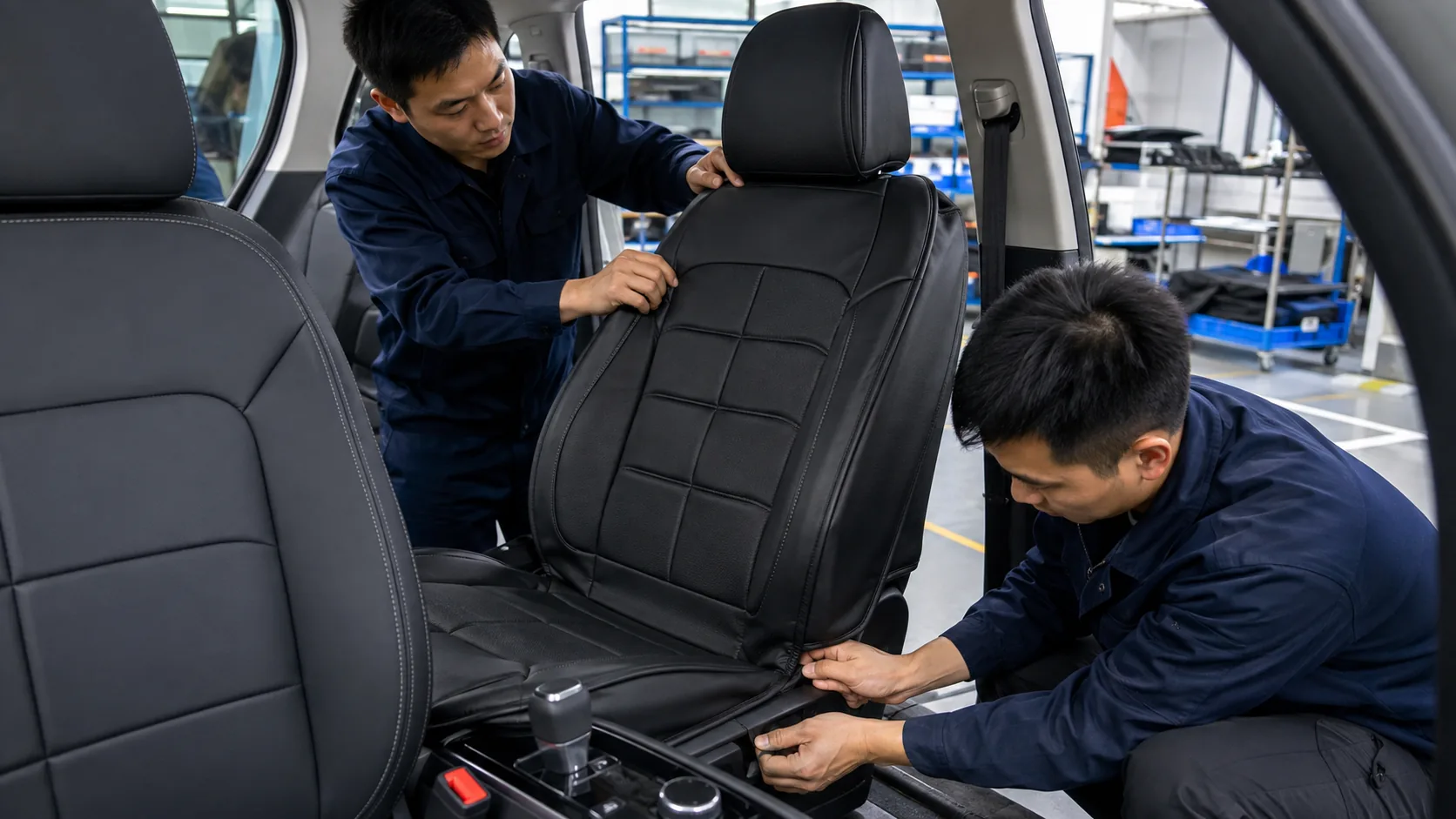
- Seitenairbag-Reißnähte. Wenn Ihre Abdeckungen über der Airbag-Entfaltungszone liegen, sind präzise Reißnähte ein Muss. Stellen Sie sicher, dass die Nahtposition mit dem fahrzeugseitigen Bereitstellungspfad übereinstimmt, bevor Sie sich auf eine SKU festlegen.
Passendes Material für Ihren Vertriebskanal
| Kanal | Empfohlenes Material | Warum |
|---|---|---|
| Einzelhandel / Mitfahrgelegenheiten in warmen Klimazonen | Eisseide | Atmungsaktivität ist das Verkaufsargument und rechtfertigt einen Aufpreis |
| Flotte und kommerziell | PU-Leder | Einfache Reinigung und professionelles Aussehen |
| Familien-/Schwerlastfahrzeuge | Verstärkter Stoff | Haltbarkeit und Fleckenbeständigkeit |
| Preisorientierte Rabattkanäle | Standardstoff | Volumenspiel |
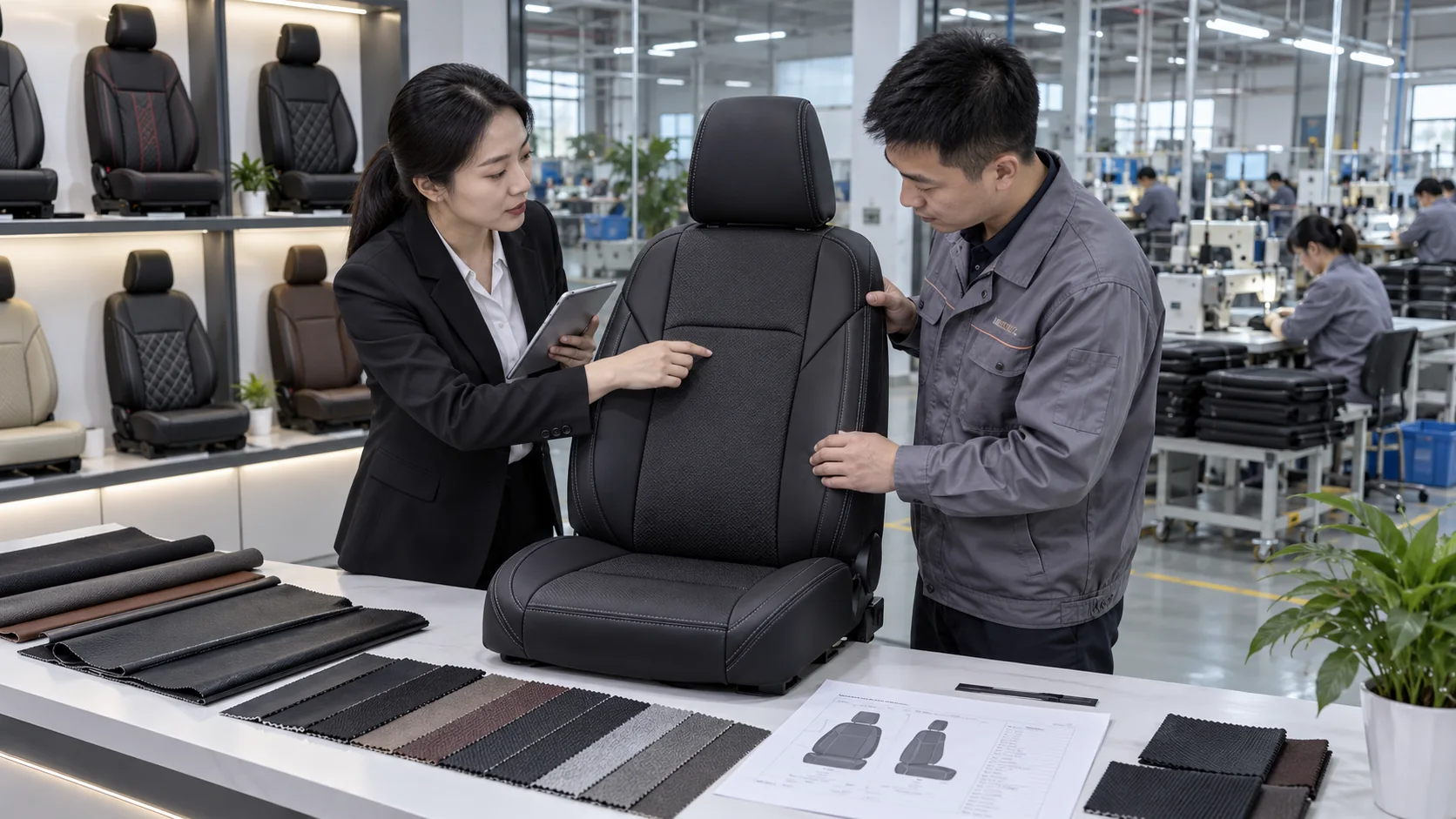
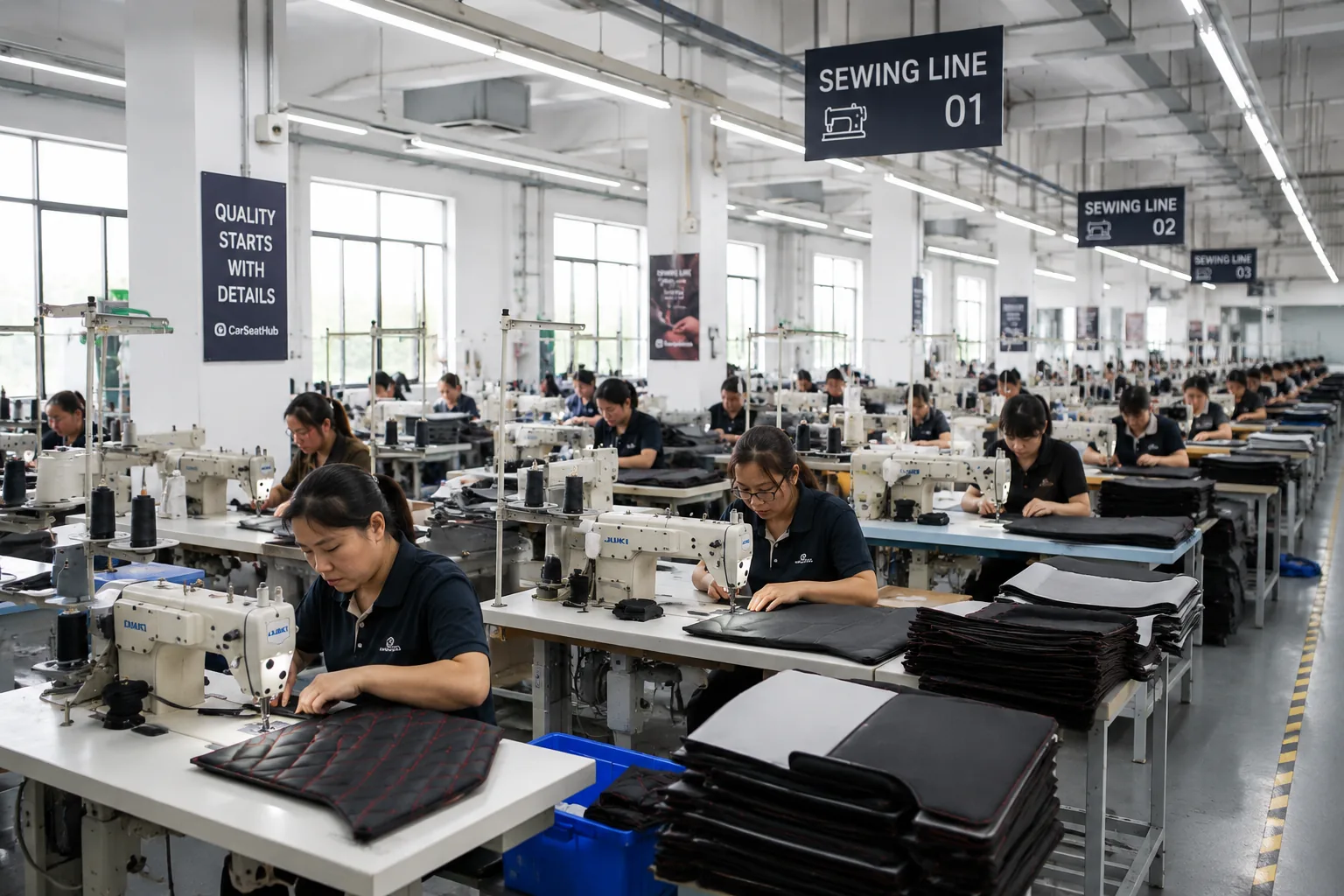
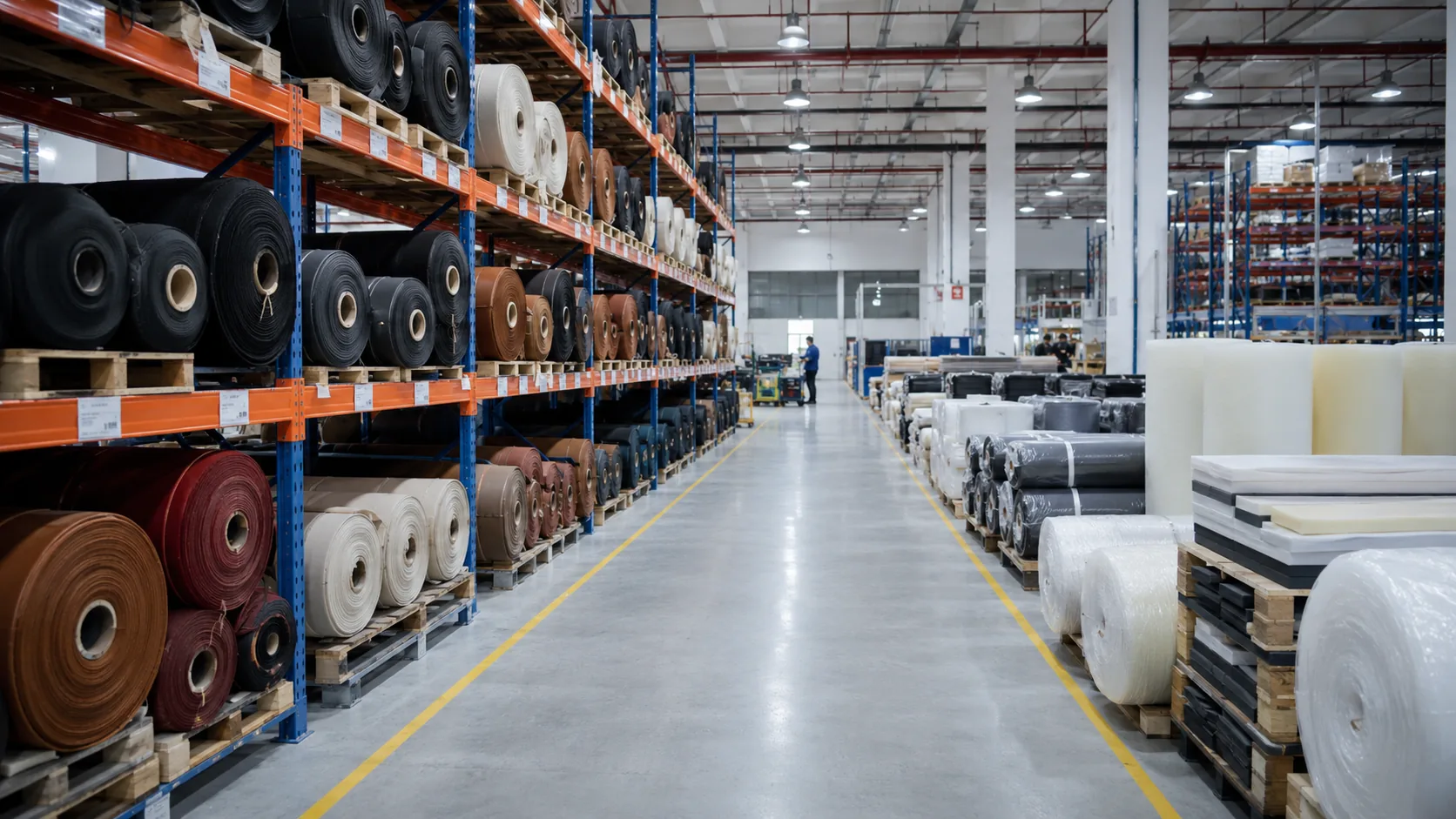
Eine Fabrik, die 22 SKUs herstellt sechs Serien - Eisseide, Leder, Sport, Klassik, Cartoon und Universal - kann Probieren Sie jede Materialfamilie aus gegen deinen Kanal, bevor du dich zum Bulk-Verkauf entscheidest. Das ist der Vorteil der Beschaffung bei einem Hersteller statt bei einem Handelsunternehmen.
Fragen, die Sie vor Ihrer ersten Bestellung stellen sollten
Bevor Sie eine Bestellung unterzeichnen, bestätigen Sie Folgendes mit dem Lieferanten:
- Können sie von jedem Material, das Sie verkaufen möchten, ein physisches Muster anfertigen?
- Was ist die Mindestbestellmenge pro Material und pro SKU?
- Entspricht die Konstruktion der angegebenen Schichtstruktur und Abriebfestigkeit?
- Was passiert, wenn eine Charge die Prüfung – Ersatz, Nacharbeit oder Gutschrift – nicht besteht?
Materielles Wissen ist die günstigste Versicherung, die Sie in dieser Kategorie abschließen können. Es lohnt sich, eine langfristige Beziehung zu einem Lieferanten aufzubauen, der diese Fragen mit echten Produktionsdaten und nicht mit Marketingsprache beantwortet. Informationen zu MOQ und Preisen finden Sie in unserem Gespräch Käuferleitfaden zu MOQ und Preisen; um die Fabrik hinter dem Stoff zu beurteilen, unsere Komplettlösung zur Herstellung.
Sind Sie bereit, Materialien nebeneinander zu vergleichen? Fragen Sie unser Werk vor Ihrer ersten Bestellung nach einem Materialmusterset. Fordern Sie kostenlose Materialmuster an.