



Il trasporto aereo consegna i coprisedili in 7-15 giorni lavorativi; il trasporto marittimo richiede 25-40 giorni e il prezzo è per unità e volume. I coprisedili sono leggeri, compatti e ben impilabili, il che li rende adatti a entrambi i canali. Scegliere il canale giusto e capire cosa determina i tempi di consegna è la differenza tra un'importazione regolare e un ritardo costoso. Ecco cosa dovrebbero pianificare gli importatori - e il nostro Guida agli ordini B2B copre il flusso di lavoro di importazione più ampio.
Aria vs. mare: quanto costa ciascun canale
Il trasporto aereo avviene tramite reti di corrieri come DHL, FedEx e UPS con consegna in 7-15 giorni lavorativi. È la scelta giusta per i primi ordini, i nuovi SKU e i più venduti in cui lo stock costa più del trasporto. Il trasporto marittimo è notevolmente più economico per unità e si adatta al rifornimento di grandi volumi, ma il transito dura 25-40 giorni e richiede un orizzonte di pianificazione più lungo. Molti distributori gestiscono un ibrido: aria per chi si muove velocemente, mare per la base stabile - vedi il guida universale all'ingrosso per come funziona quella divisione.
Ciò che effettivamente determina il lead time
Il tempo di consegna totale è il tempo di produzione più il transito. La produzione dipende dal carico di fabbrica: una struttura di 60.000 metri quadrati che produce oltre 2.000 set al giorno può completare un ordine di container in giorni, non in settimane. Conferma la finestra di produzione corrente al momento della prenotazione e crea un buffer per l'approvazione e l'ispezione dei campioni. Tempo di transito che puoi prevedere; carico di produzione di cui devi chiedere.
Specifiche di imballaggio e cartone
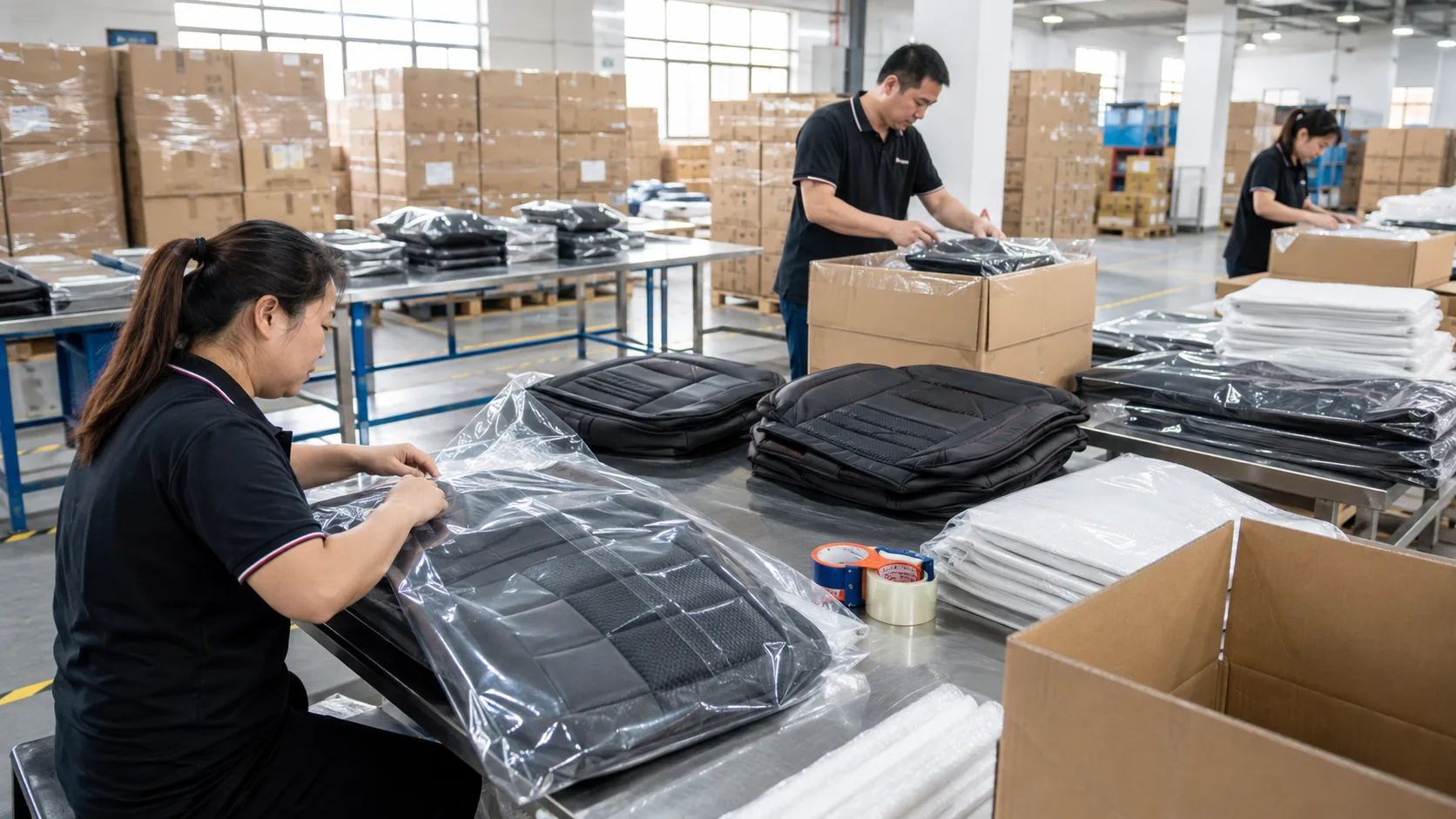
Le coperture vengono spedite in set, generalmente in sacchetti di polietilene all'interno di cartoni per l'esportazione. Specifica le dimensioni del cartone e le unità per cartone in base al tuo magazzino e alla gestione della vendita al dettaglio. Un rapido movimento copertura universale a grande diamante è un tipico primo SKU per definire le specifiche del cartone. Un buon imballaggio previene i danni e mantiene prevedibile il volume del trasporto: un dettaglio importante perché il prezzo del trasporto marittimo è basato sul volume. Richiedi le specifiche della confezione prima dell'ordine, non dopo.
Incoterms e documentazione
Concordare gli Incoterms nell'ordine di acquisto: chi paga il trasporto, l'assicurazione e chi gestisce la dogana in ogni fase. Per le spedizioni aeree, il corriere gestisce la maggior parte della documentazione. Per il trasporto marittimo, verificare che la fattura commerciale, la bolla di accompagnamento e la polizza di carico siano preparate correttamente prima della partenza della nave. Gli errori di documentazione sono la causa più comune di ritardi doganali. L'inclusione di questi termini nel costo unitario è coperta dalla nostra MOQ e guida ai prezzi.
Considerazioni su dazi e dogane
Le aliquote dei dazi sugli accessori automobilistici variano in base alla destinazione e alla classificazione HS. Controlla il codice HS corretto per i coprisedili per auto nel tuo mercato e calcola il dazio nel costo allo sbarco. Collaborare con il fornitore su dichiarazioni accurate previene ritardi ed evita sanzioni. In caso di dubbio, utilizzare uno spedizioniere doganale che conosca la categoria degli accessori automobilistici.
Pianificazione dell'ordine
Pianifica a ritroso dalla data di disponibilità: trasporto marittimo per un periodo di 30 giorni, trasporto aereo per le emergenze e un buffer sul primo ordine di qualsiasi nuovo fornitore. Una logistica affidabile inizia con un partner affidabile: chiedi informazioni sulle prestazioni di consegna passate prima di impegnarti.
Pianifica a ritroso dalla data di disponibilità e ottieni una stima di consegna prima di prenotare. Richiedi un preventivo di consegna.