
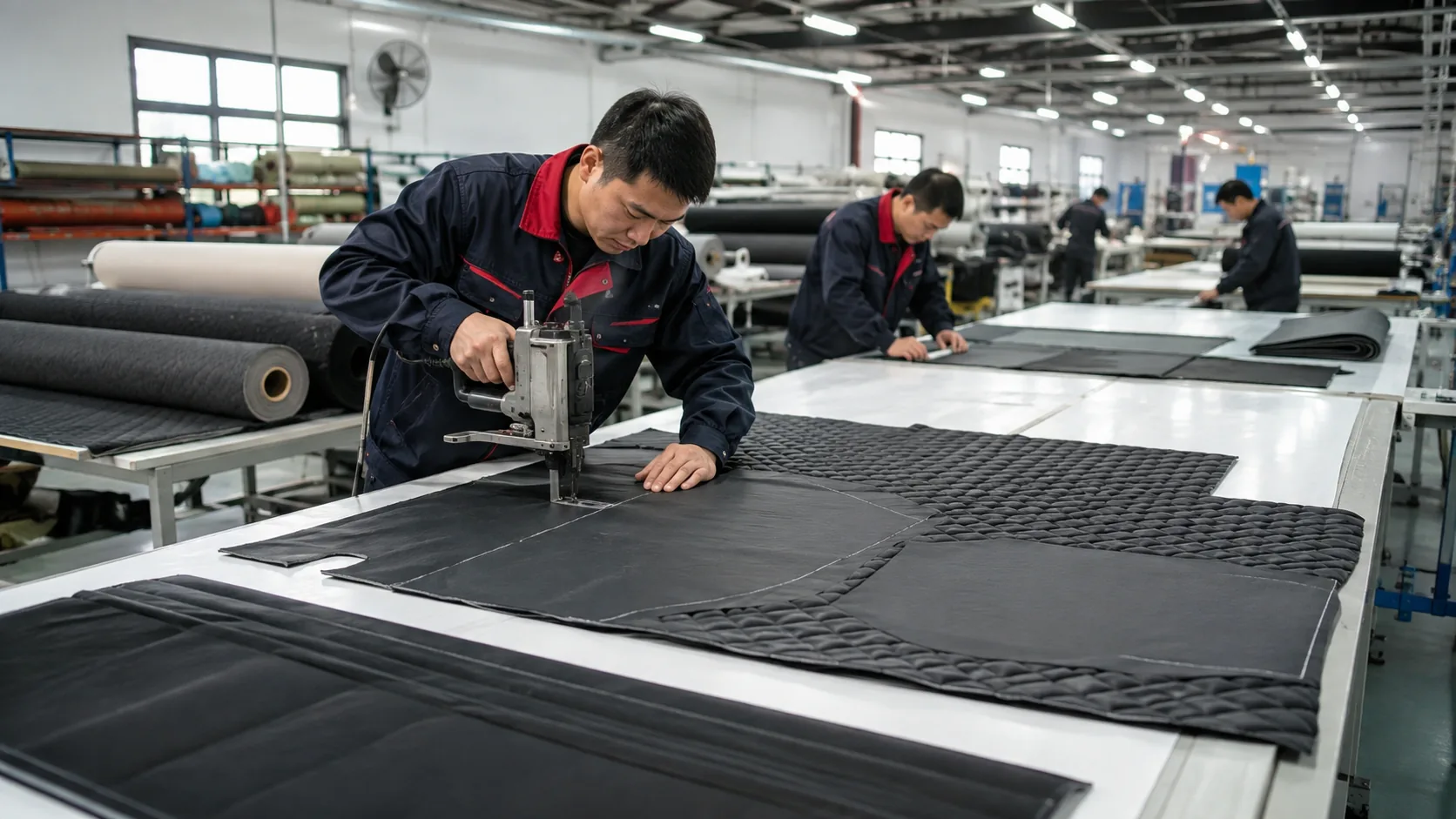
Seat covers are built in five steps, and durability is set at lamination - not at the surface. Behind every seat cover order is a production line with defined steps, and the more you understand that line, the better you can specify, inspect, and negotiate. This walkthrough follows a cover from raw fabric to packed carton at a full-scale factory. If you are running a custom program rather than buying stock lines, see our OEM production process walkthrough instead.
Step 1 - Fabric Cutting and Preparation
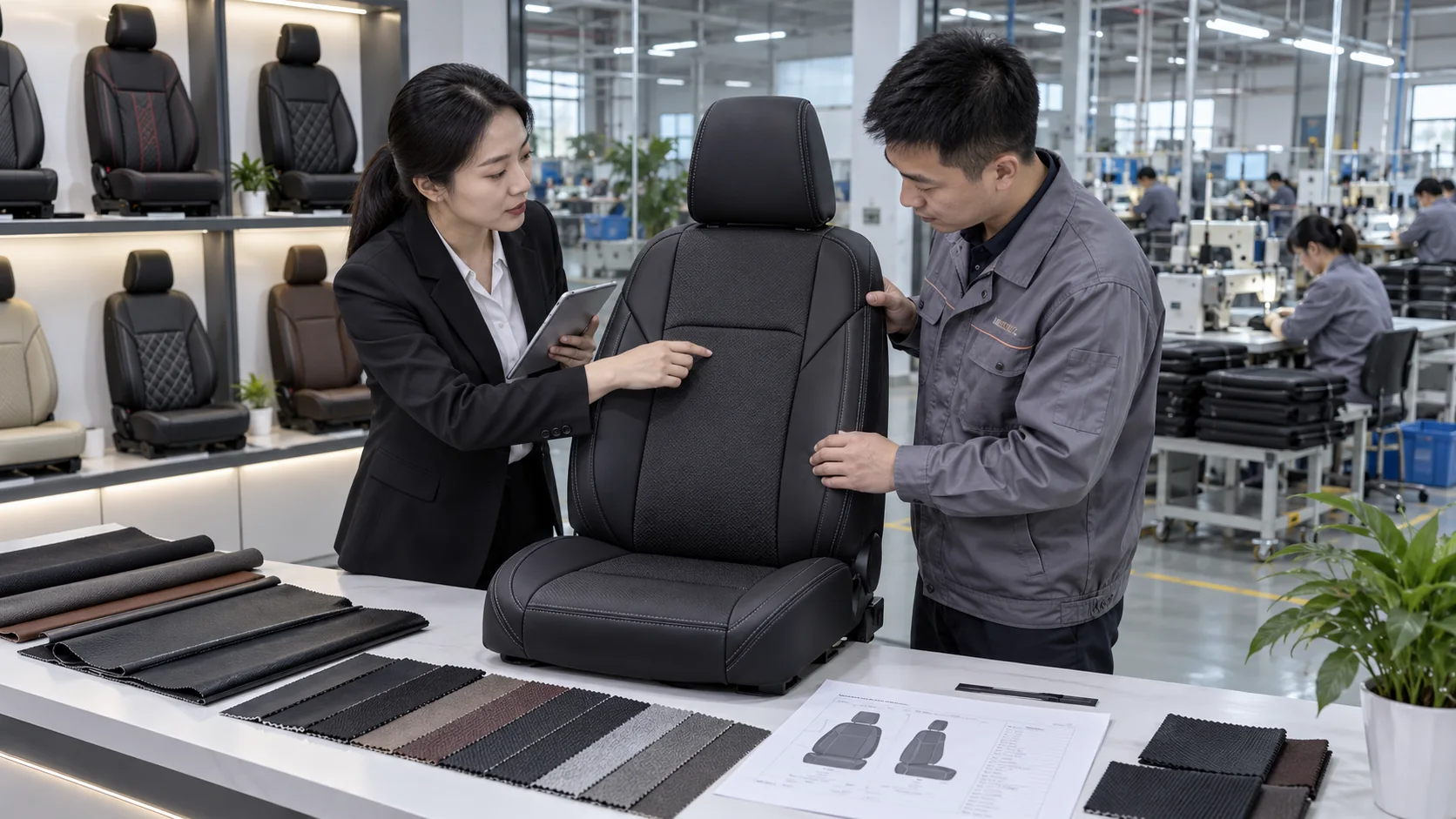
Fabric arrives in rolls and is cut into panels according to the pattern for each seat position. Cutting accuracy drives everything downstream: a panel cut a few millimeters off creates a cover that fights the installer. Automated cutting improves consistency across large orders and keeps waste down, which is why modern lines run it for high-volume SKUs.
Step 2 - Layering and Foam Lamination
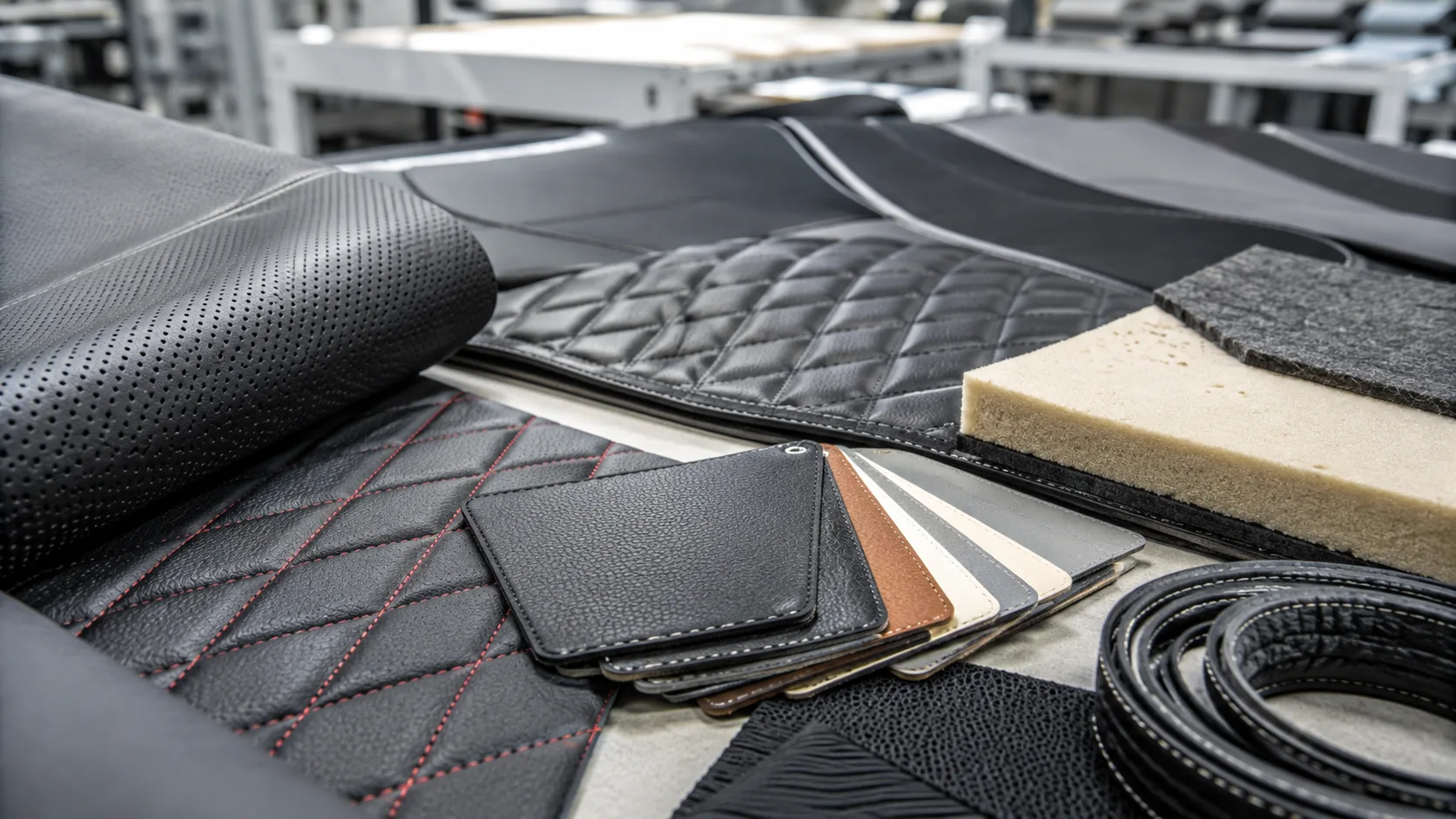
Durability is built here, not at the surface. A 4-layer construction combines a wear layer, 2 mm foam padding, and backing into a single laminated sheet. The foam provides cushioning and keeps the cover in shape; the backing stabilizes the structure. Covers with this construction pass 5,000+ rub cycles on the Martindale abrasion test before showing visible wear - a ready example is the 4-layer ice premium leather cover. Material selection is covered in our material library.
Step 3 - Sewing and Stitching
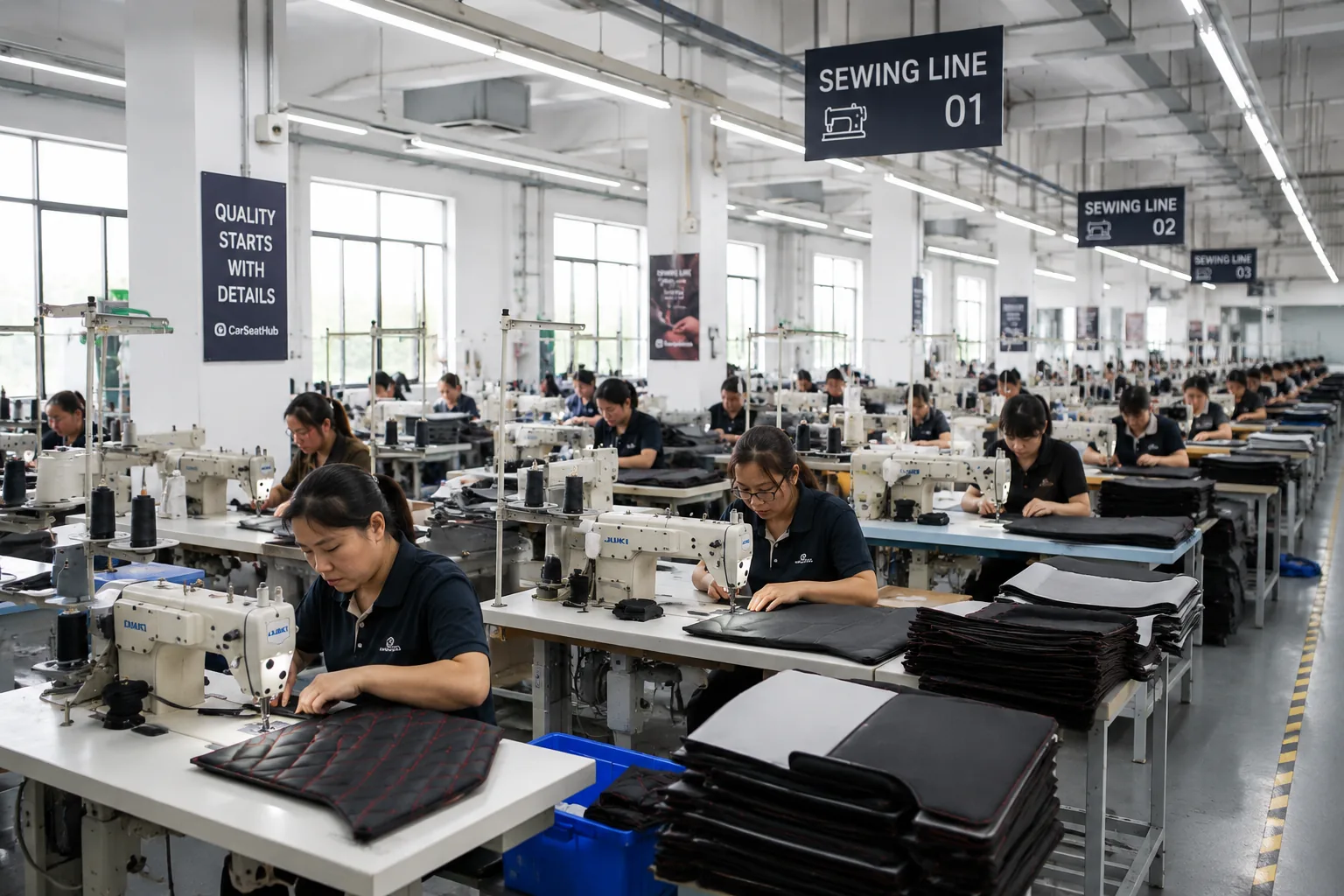
Panels are sewn into covers with attention to stitch density and seam strength - the two most common failure points in cheap covers. Reinforced double stitching goes on stress areas like side bolsters and attachment points. Seam quality is where low-cost production cuts corners, and it is also the first thing an end buyer notices when a cover fails.
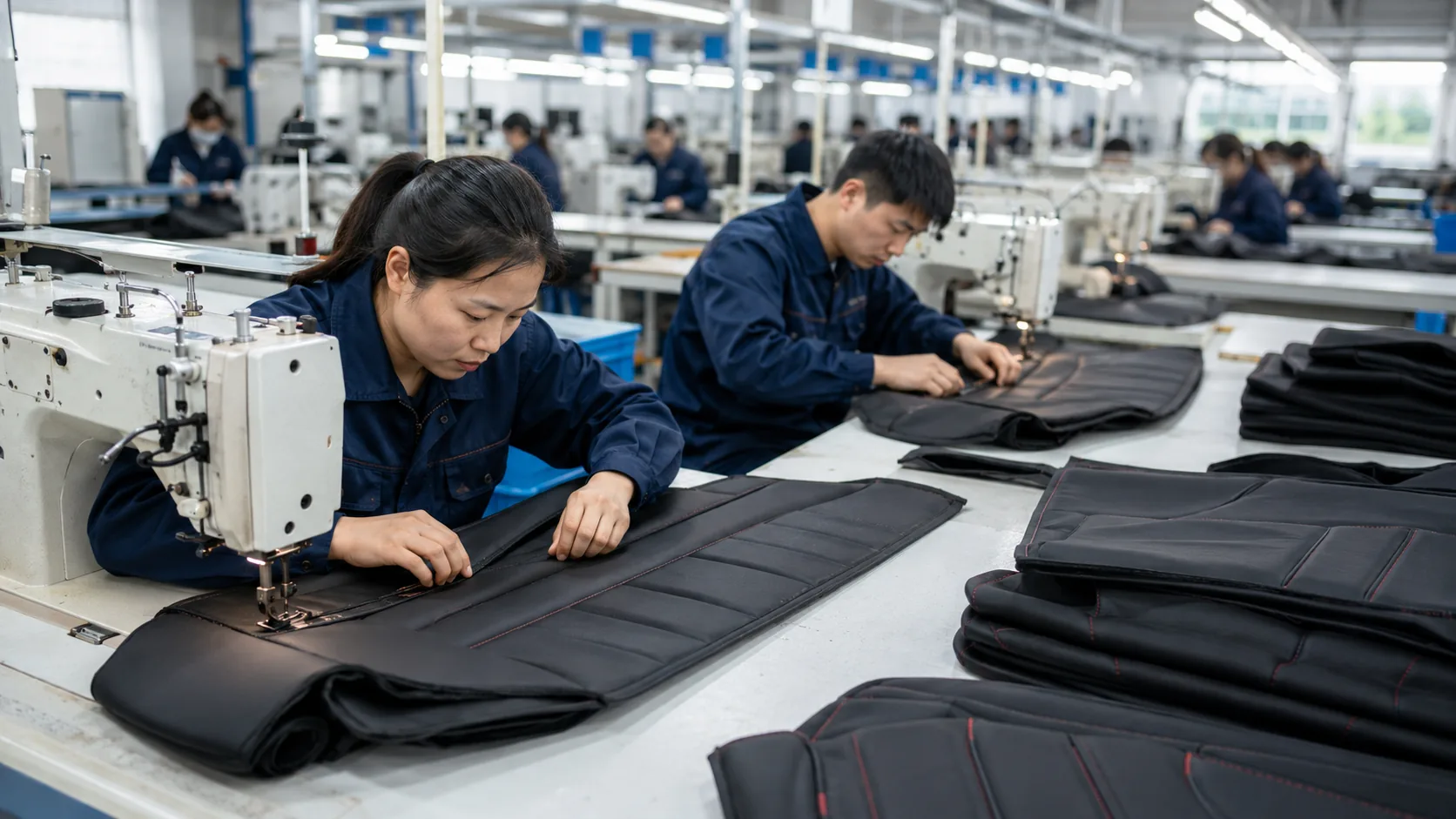
Step 4 - Side Airbag Tear Seam Installation
For covers that sit over airbag deployment zones, precision tear seams are added so the airbag deploys without obstruction. The seam position must match the vehicle deployment path, which is why vehicle-specific patterns matter. This is a safety feature, not a checkbox - confirm it on every SKU that covers the airbag area, and include it in your inspection checklist.
Step 5 - Final Inspection and Packing
Finished covers pass through in-line quality control - stitching, dimensions, color consistency, and airbag seam placement - before packing. Cartons are standardized for transit. A factory producing 2,000+ sets per day runs this inspection continuously, which is what allows a container order to ship within 7-15 business days.
What This Means for Your Purchase Order
When you specify a cover, name the construction, not just the surface material. A 4-layer build with a 5,000+ rub abrasion rating and airbag tear seams is a specific, inspectable specification - and it is the difference between a product that sells for years and one that generates returns.
Name the construction in your PO: 4-layer, 5,000+ rub abrasion, airbag tear seams. Request our spec sheet template to make sure nothing is missed.