

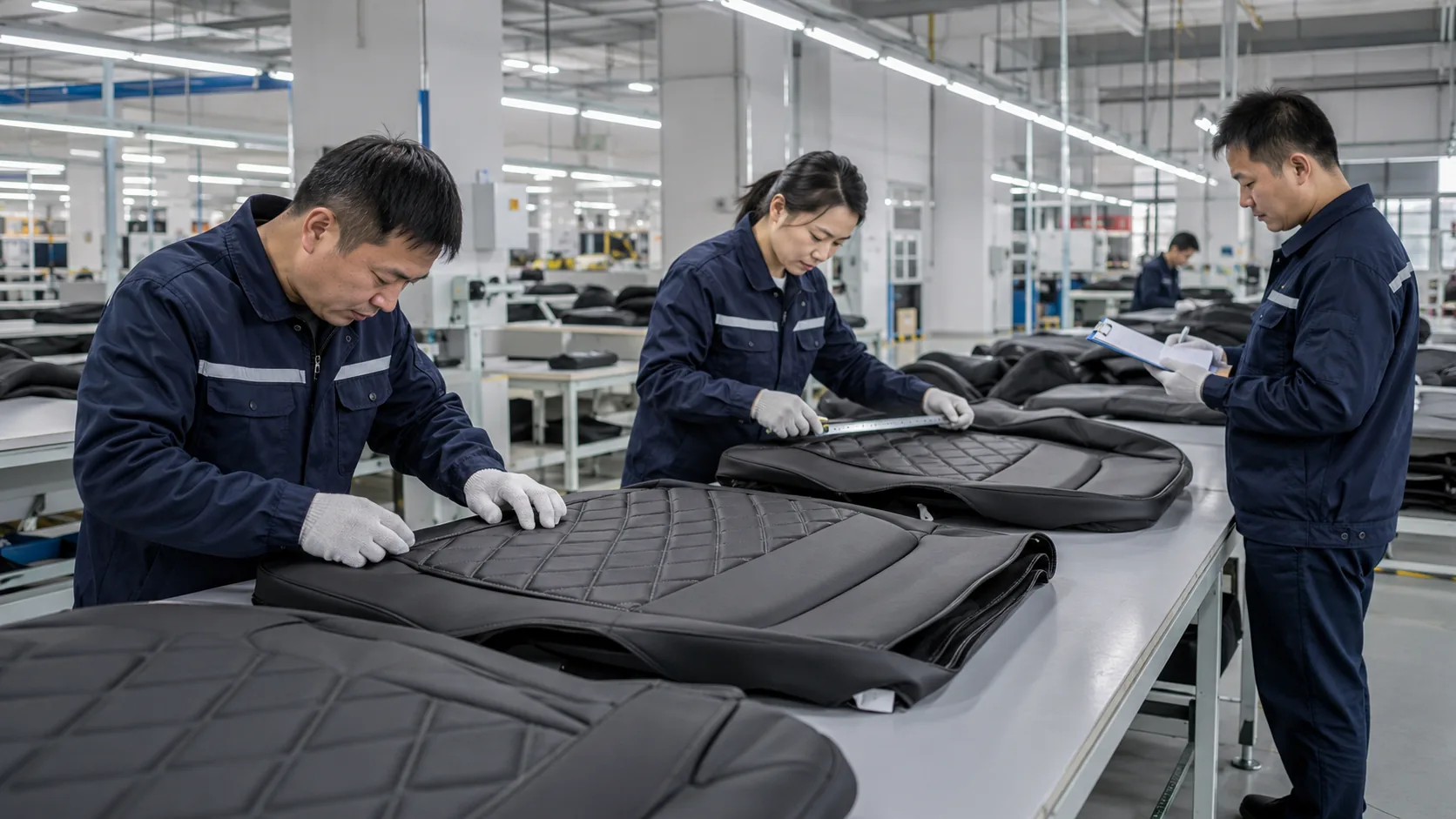
Returns are the fastest way to erase margin in the seat cover business, and most returns trace back to five checks a proper inspection would have caught at the factory: fabric, stitching, fitment, airbag seams, and packaging. Whether you use in-house staff or a third-party inspection company, this checklist covers the checks that matter on every seat cover order - and it mirrors how our own factory line is checked.
Fabric and Material Checks
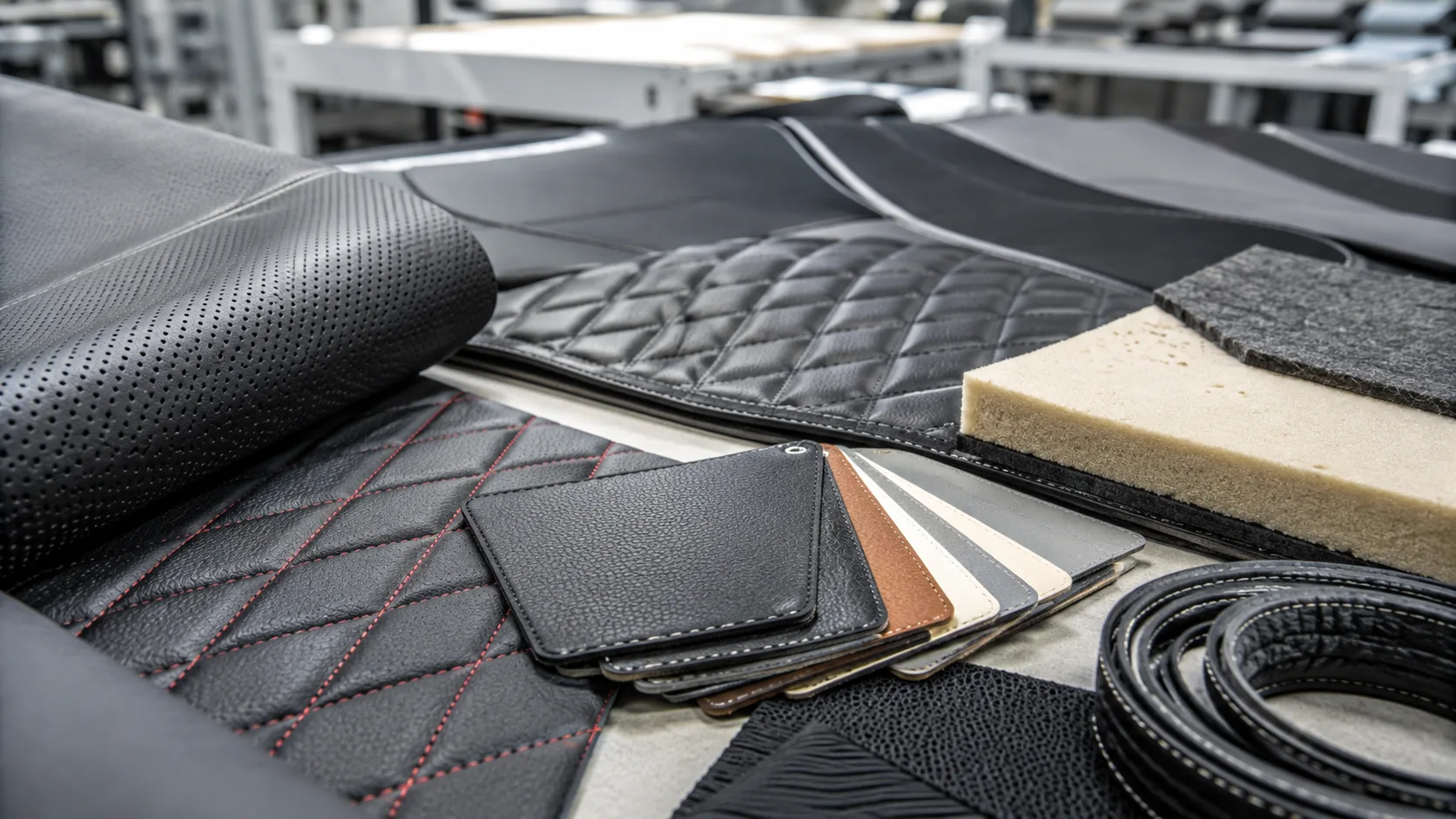
Compare the bulk fabric against the approved sample under consistent lighting. Check color fastness across panels from the same roll and between rolls. Look for pilling, snags, and density differences in the weave. A quick abrasion check on the wear surface is worth doing on one piece per carton lot. Understanding what each material should look and feel like - our material library is a useful reference - makes these checks faster.
Stitching and Seam Integrity
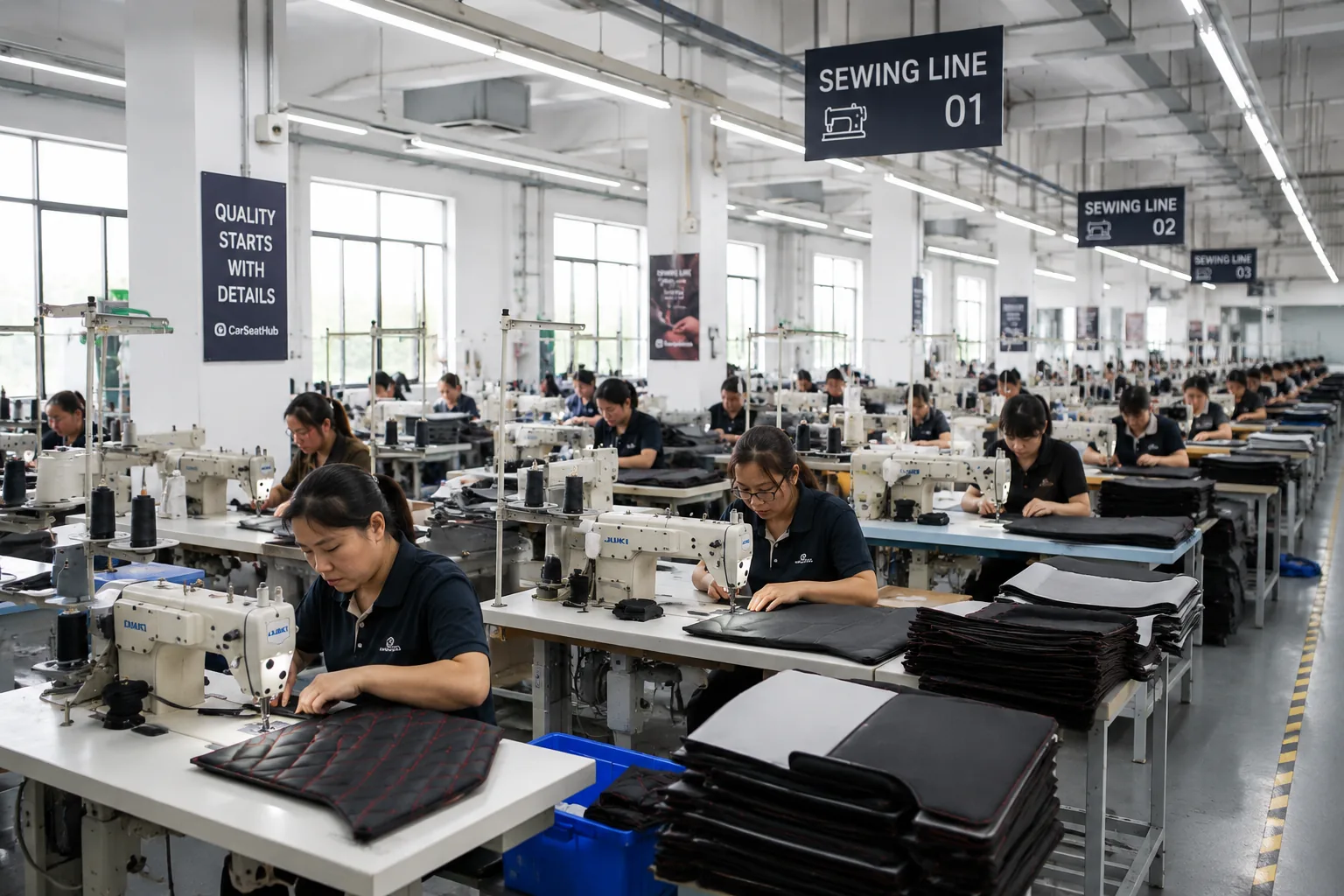
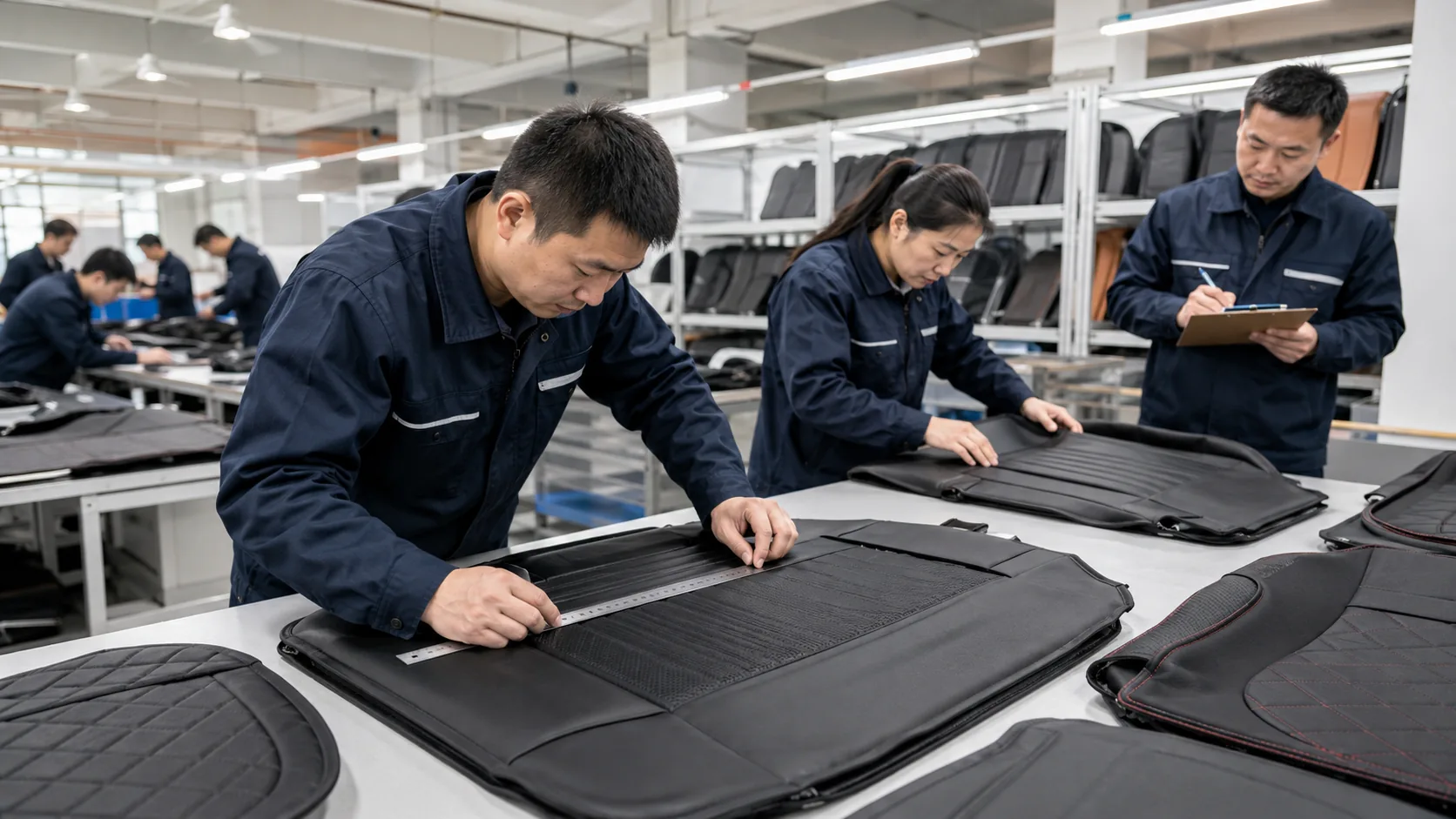
Inspect stitch density and seam straightness on every piece sampled. Check stress points - side bolsters, hem edges, attachment straps - for double stitching where specified. Pull-test a sample seam to confirm it holds under tension. Loose or skipped stitches at stress points are the number one cause of early cover failure.
Fitment and Airbag Compatibility
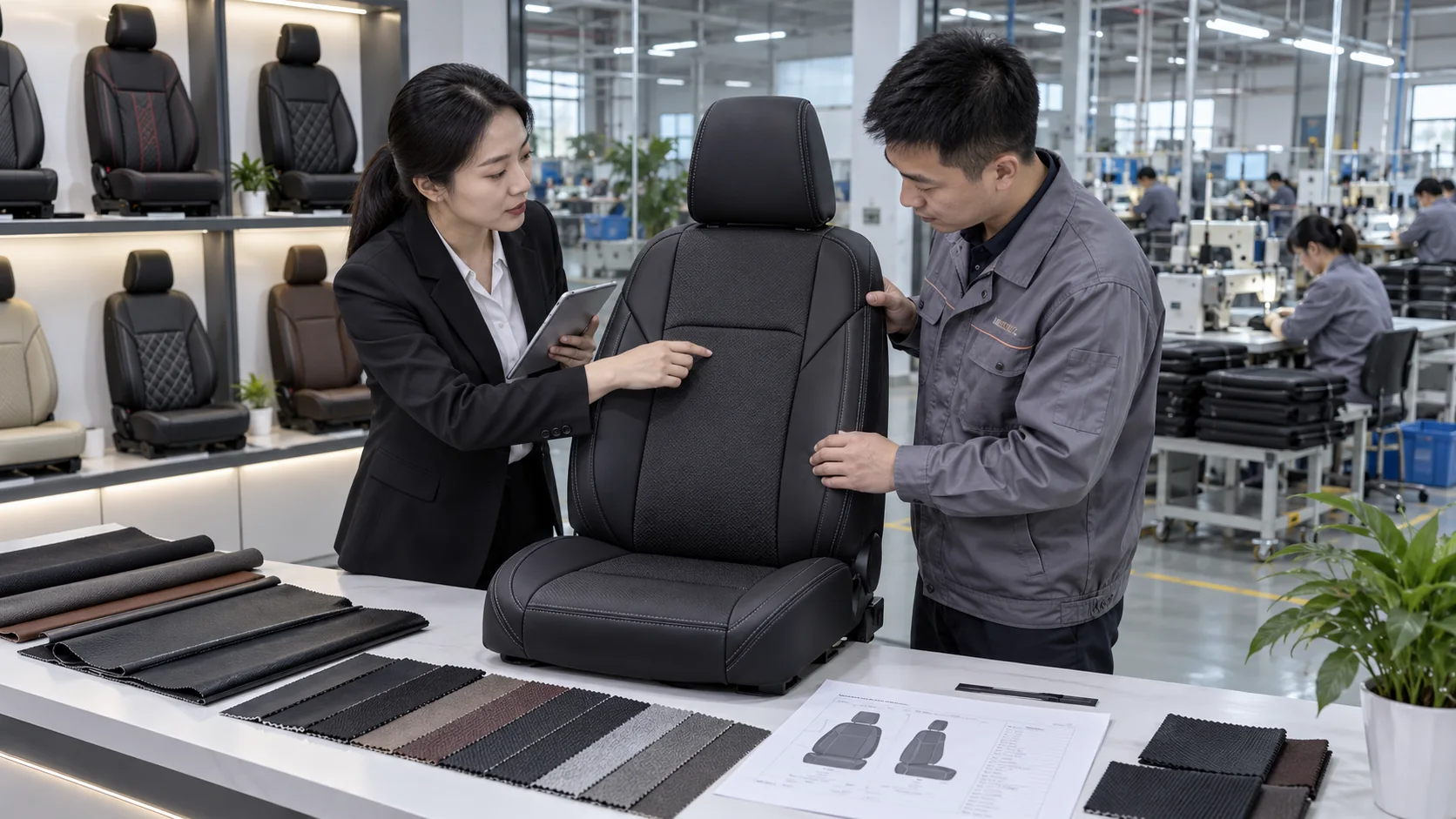
Confirm the airbag tear seam is present and correctly positioned on any SKU covering the airbag deployment zone - a construction like the ice premium leather cover specifies the seam in its build. Verify elastic hems and straps are complete and correctly sized for the seat profile. If possible, fit-test one cover on the actual vehicle model before the full batch ships - fit issues found after arrival are the most expensive to fix.
Packaging and Labeling
Check that carton size, weight, and packing count match the purchase order and the shipping manifest. Verify labels and barcodes against your spec - wrong labels cause customs delays and customer complaints. Inspect for proper protection against moisture during transit.
AQL Sampling: How Many to Check
| Order Size | Sample Size | Major Defects Allowed |
|---|---|---|
| Up to 500 PCS | 20 | 1 |
| 501 - 1,200 PCS | 32 | 2 |
| 1,201 - 3,200 PCS | 50 | 3 |
| 3,201+ PCS | 80 | 5 |
Define major and minor defects in your contract before production. Major defects - torn seams, wrong airbag seam placement, color deviation beyond tolerance - should be grounds for rejection. Minor cosmetic issues should be accepted with a negotiated allowance, or corrected by the supplier before shipping.
Making Inspection Work for You
Inspection is a partnership, not a threat. Give the supplier the checklist before production so they can self-check against it. Share the result of every inspection - passing and failing - so both sides converge on the same standard. A factory that produces 2,000+ sets daily has quality control built into its line; your job is to verify that standard is met on your order. To judge whether a factory is worth trusting, see our supplier selection guide; to understand where defects start, our manufacturing walkthrough.
Use this checklist on your next order - or let our QC team run it for you before shipment. Request inspection support.