
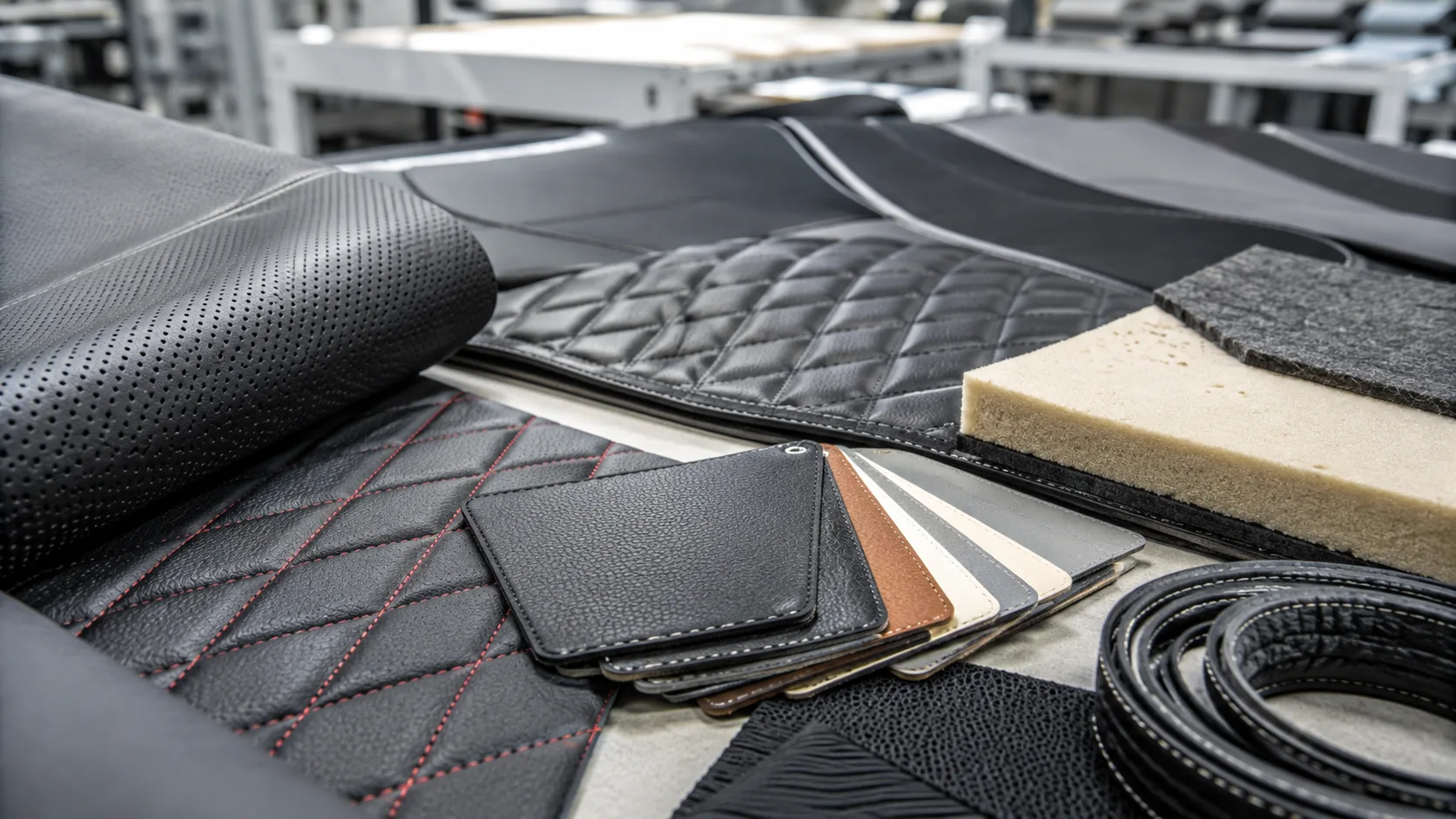
Best for warm climates: ice-silk. Best for fleets: PU leather. Best for families: reinforced fabric. The material you choose defines your product line more than any other decision. Import the wrong fabric and you will fight returns, markdowns, and a reputation problem for a full season. Get it right and the same cover can carry a healthy margin for years. This guide is written for importers and wholesale buyers who need to compare seat cover materials against their target market, not for end consumers.
The Materials That Matter for Your Market
Most of the seat covers leaving Asian factories today fall into three families, and each one maps to a different customer profile.
Ice-Silk (polyester + spandex blend). This is the fastest-growing category in warm-climate markets. The cross-weave structure delivers a 10-15% higher air permeability rate than standard woven fabrics, which keeps the seat surface measurably cooler after sun exposure without the sticky feel of leather. Ice-silk suits importers selling to ride-share drivers, daily commuters, and any market where vehicles sit in the sun - see our ice-silk car seat covers for a ready example of the family.
PU leather. The professional and commercial choice. Fleet operators, taxi companies, and business users prefer it because it cleans easily, looks premium, and reads as an upgrade to the end buyer - a full-leather car seat cover is typical of what commercial channels order. It is the right call when your channel values appearance and easy maintenance over breathability.
Reinforced fabric and sport fabric. The workhorse for families, pet owners, and heavy-use vehicles. Higher abrasion resistance and water-repellent backing make it the safe, high-volume option that sells year-round.
Construction Quality You Should See in Every Sample
Material alone does not make a durable cover. Ask your supplier about the construction behind the surface, and check these three things in every sample:
- Layer count. A 4-layer construction - wear layer, 2 mm foam padding, and backing - absorbs impact and keeps its shape. Single-layer covers look fine on day one and sag within months.
- Abrasion resistance. Covers built to pass 5,000+ rub cycles on the Martindale test hold up to daily use. Anything rated far below that is a returns risk in high-wear markets.
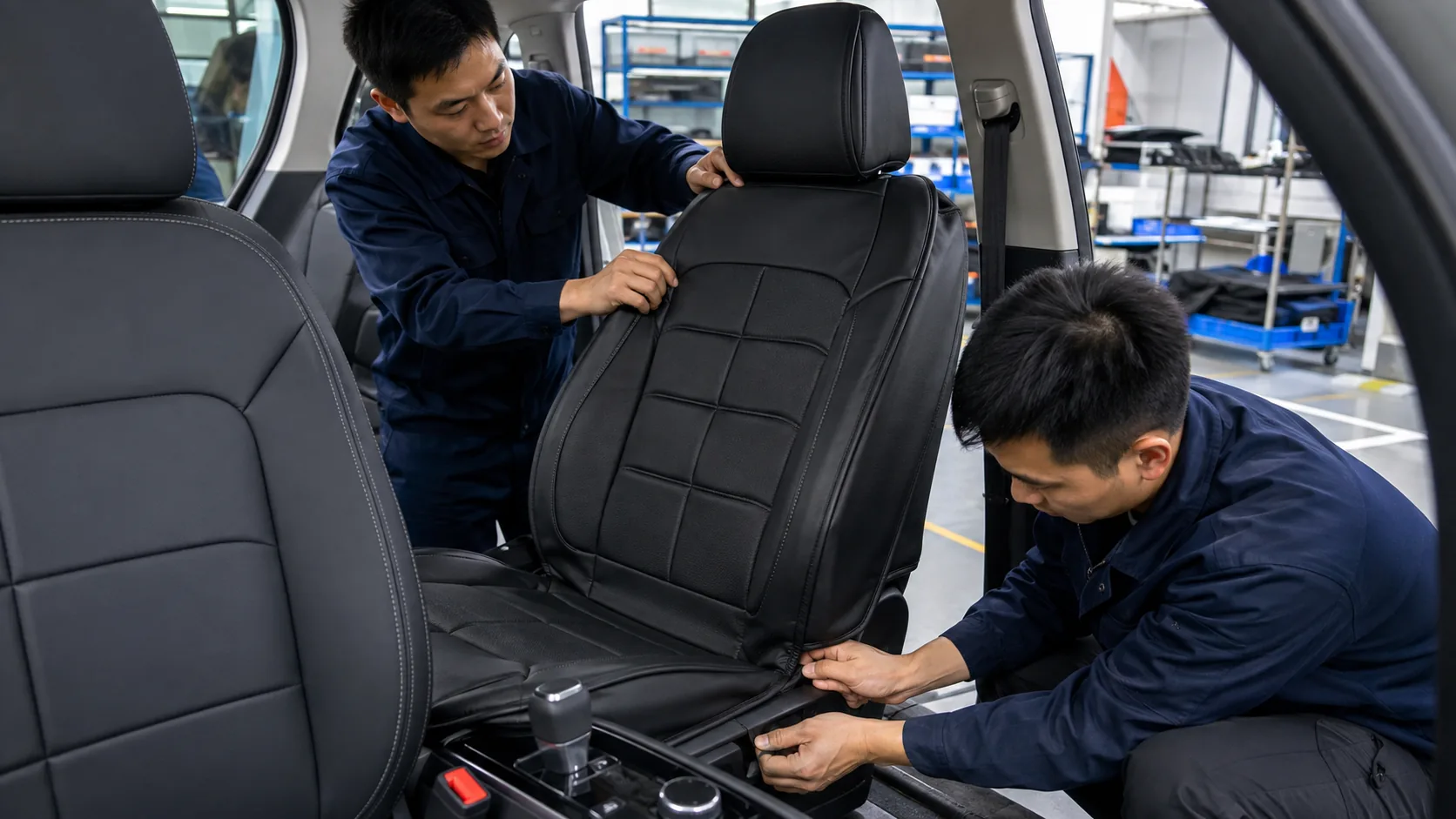
- Side airbag tear seams. If your covers sit over the airbag deployment zone, precision tear seams are non-negotiable. Confirm the seam position matches the vehicle-side deployment path before you commit to a SKU.
Matching Material to Your Sales Channel
| Channel | Recommended Material | Why |
|---|---|---|
| Warm-climate retail / ride-share | Ice-Silk | Breathability is the selling point and justifies a premium |
| Fleet and commercial | PU Leather | Easy cleaning and professional appearance |
| Family / heavy-use vehicles | Reinforced fabric | Durability and stain resistance |
| Price-led discount channels | Standard fabric | Volume margin play |
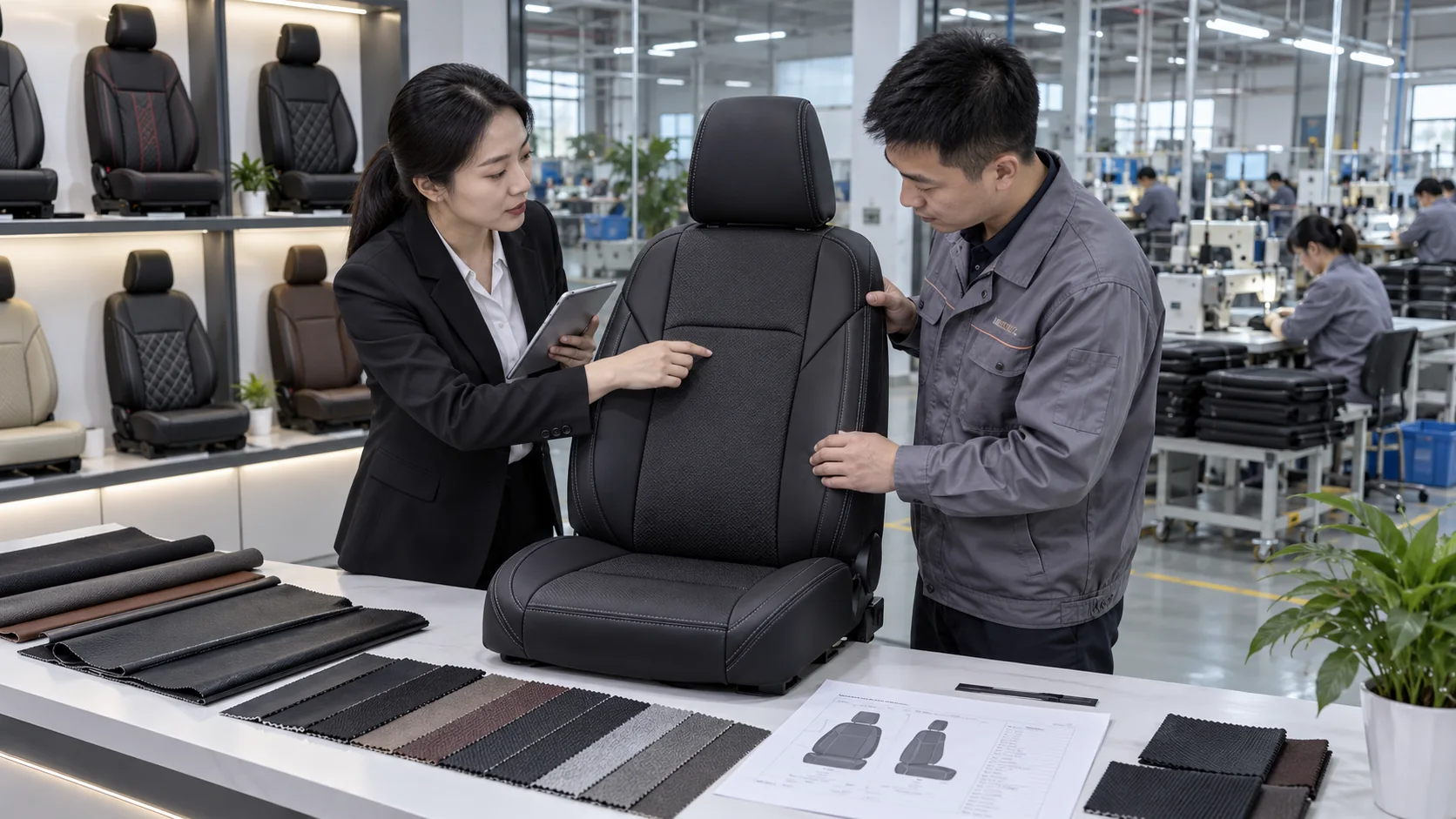
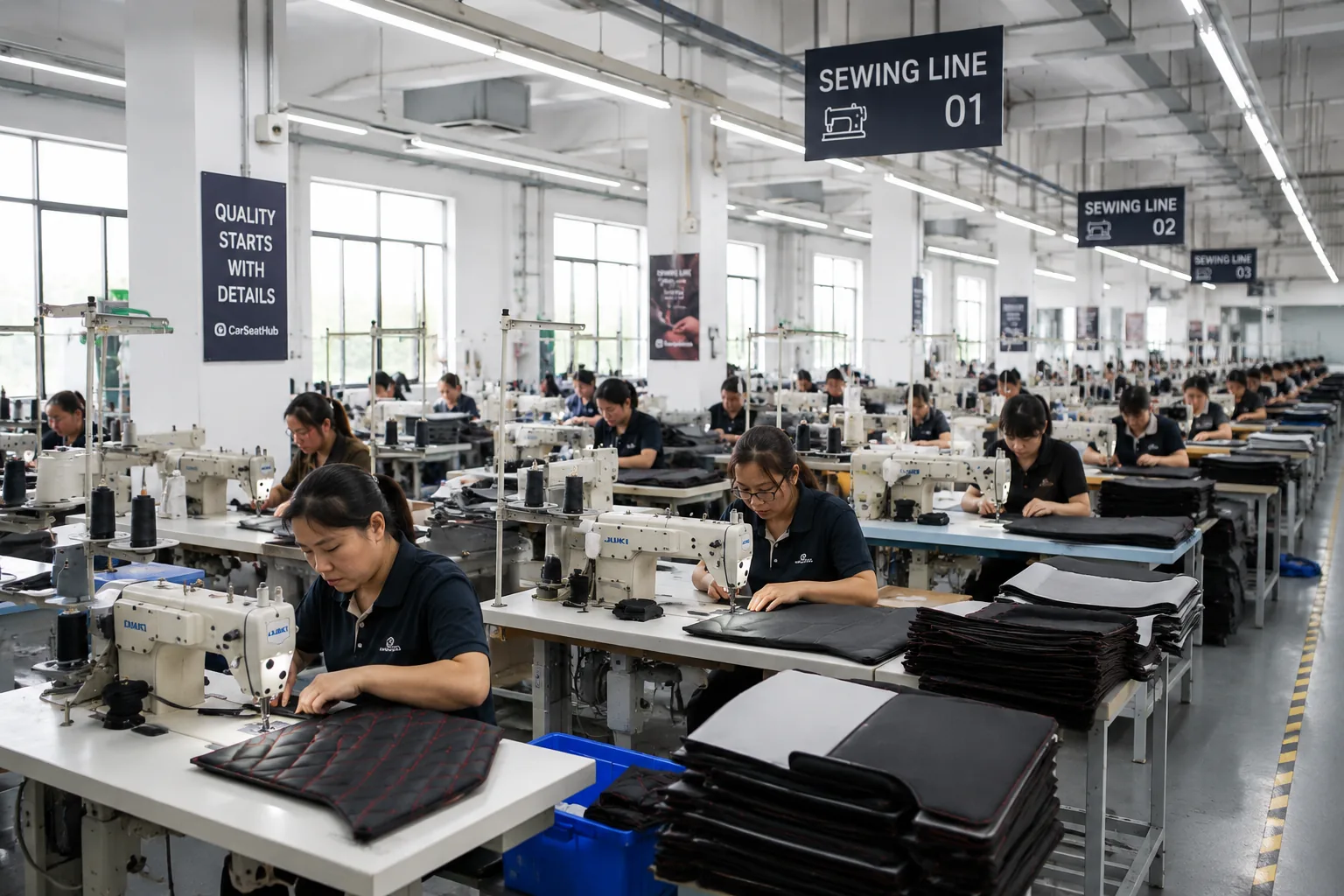
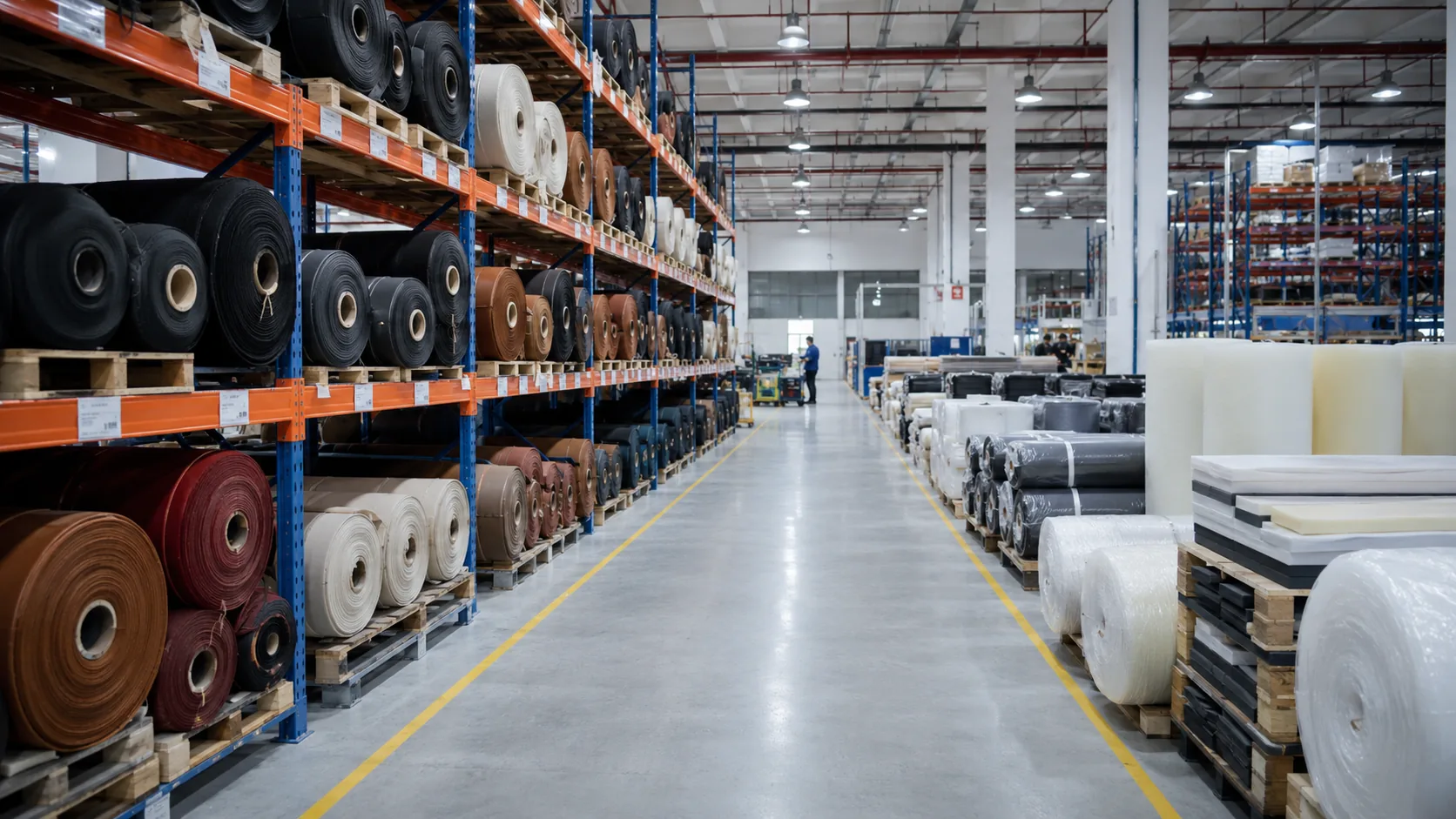
A factory that builds 22 SKUs across six series - ice-silk, leather, sport, classic, cartoon, and universal - can sample each material family against your channel before you commit to bulk. That is the advantage of sourcing from a manufacturer rather than a trading company.
Questions to Ask Before Your First Order
Before you sign a purchase order, confirm the following with the supplier:
- Can they produce a physical sample in each material you intend to sell?
- What is the minimum order quantity per material and per SKU?
- Does the construction match the layer structure and abrasion rating they claim?
- What happens if a batch fails inspection - replacement, rework, or credit?
Material knowledge is the cheapest insurance you can buy in this category. A supplier who answers these questions with real production data - not marketing language - is worth building a long-term relationship with. For the MOQ and pricing side of the conversation, see our buyer's guide to MOQ and pricing; to judge the factory behind the fabric, our manufacturing walkthrough.
Ready to compare materials side by side? Ask our factory for a material sample set before your first order. Request free material samples.